Corporate governance for startups

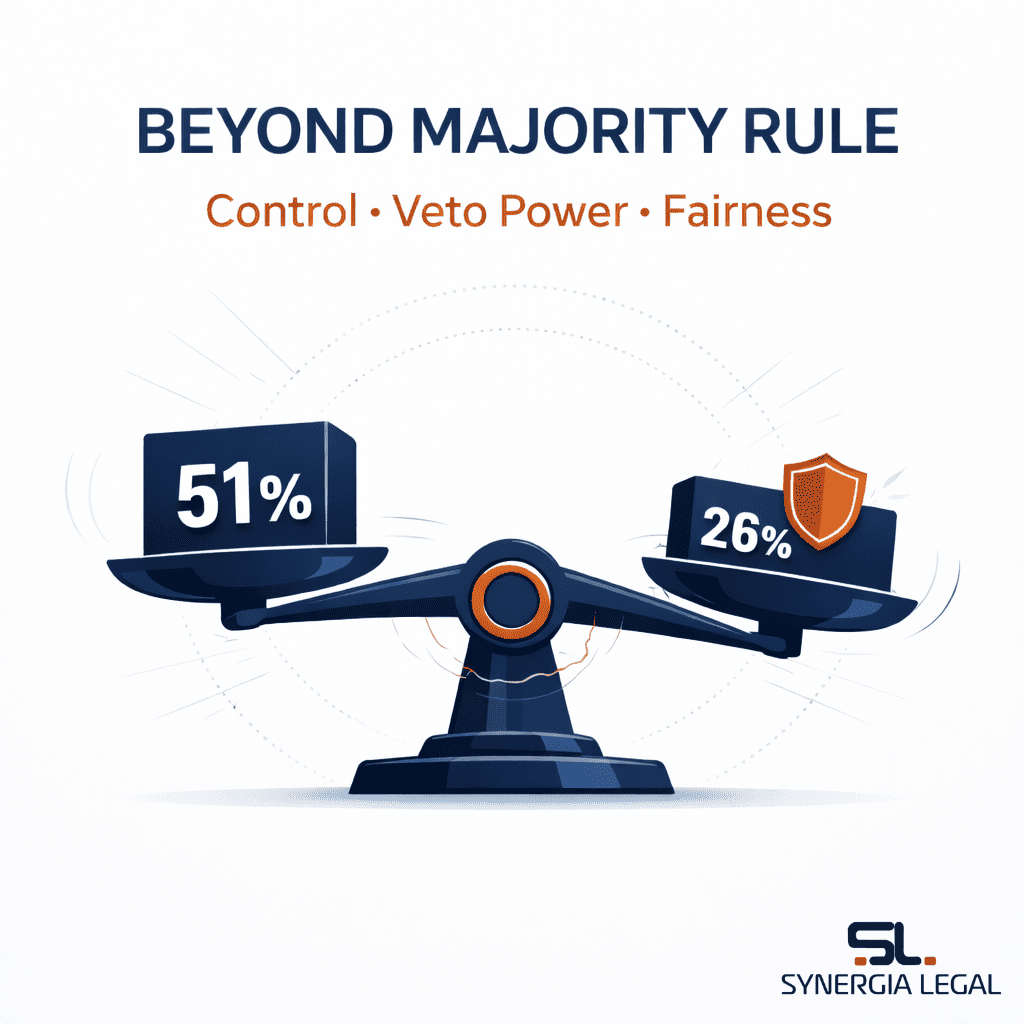
The image depicts the conflict between majority shareholder and minority shareholder in private companies

Beyond Majority Rule: Control, Veto Power and Fairness in Indian Private Companies (Corporate Governance in Private Companies, Part III)

Company law is traditionally anchored in the principle of shareholder democracy. Those who hold the majority of voting rights determine the company’s course; resolutions are passed by numerical strength; and management ultimately derives legitimacy from shareholder approval. The Companies Act, 2013 reflects this architecture. Section 47 of the Companies Act, 2013 confers voting rights upon […]


Beyond Majority Rule: Control, Veto Power and Fairness in Indian Private Companies (Corporate Governance in Private Companies, Part III) Read More »

Fiduciary responsibilities of directors under the Indian companies laws.

Directors and the Board: Corporate Stewardship under Indian Company Law (Corporate Governance in Private Companies, Part II)

Indian company law understands the Board of Directors not merely as a managerial organ, but as an institution of corporate stewardship. At its core, stewardship reflects the idea that directors exercise power in trust, for the company as a distinct legal person, and not as proprietors of corporate authority. This distinction is critical, particularly in

Directors and the Board: Corporate Stewardship under Indian Company Law (Corporate Governance in Private Companies, Part II) Read More »

Corporate Governance as a foundation of companies

Introduction to Corporate Governance in India: Foundations, Evolution, and Relevance (Corporate Governance in Private Companies, Part I)

Corporate governance is no longer understood merely as a compliance obligation imposed by company law or securities regulation. In contemporary corporate practice, it represents a foundational business infrastructure, a framework through which decision-making authority is allocated, accountability is enforced, and long-term value is preserved. At its core, corporate governance addresses a fundamental problem inherent in

Introduction to Corporate Governance in India: Foundations, Evolution, and Relevance (Corporate Governance in Private Companies, Part I) Read More »

A founder evaluating the complete lifecycle of fundraising

From Capital to Control: Concluding the Startup Fundraising Legal Series (Startup Fundraising Series, Part X)

Fundraising, as encountered in legal practice, is rarely a linear or isolated event. Transaction counsel typically engage with fundraising decisions not only at the point of signing, but far more frequently during institutional diligence, follow-on negotiations, governance disputes, or exit processes. It is at these later stages that the legal and contractual consequences of earlier

From Capital to Control: Concluding the Startup Fundraising Legal Series (Startup Fundraising Series, Part X) Read More »

Disclaimer

The Bar Council of India does not permit any form of advertisement by advocates in India. By accessing the website: www.synergialegal.com, you understand and agree that the content published on the website is purely informational, and shall not be construed as an advertisement or promotional in nature.

You further agree that nothing published on the website: www.synergialegal.com shall be construed as a legal opinion or an advice provided by Synergia Legal or any of its members. Furthermore, nothing contained on this website creates any attorney client relationship between the user and Synergia Legal.