Legal Visualizer

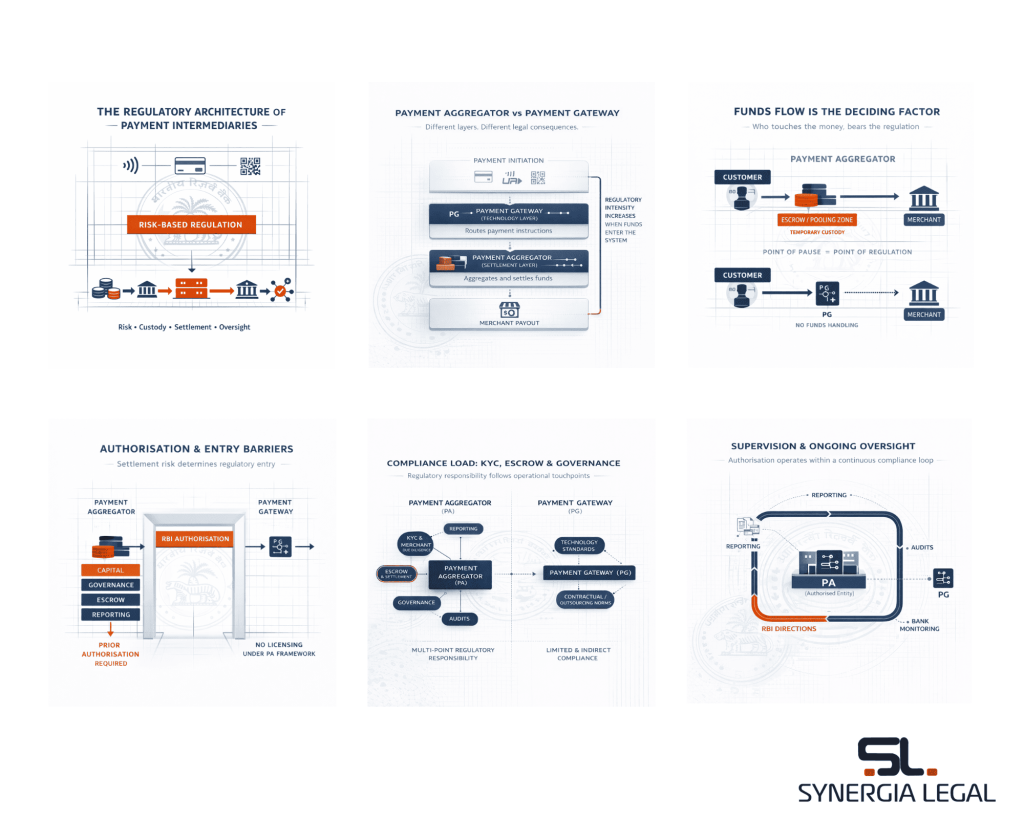
The image highlights the regulatory compliances applicable to payment aggregators, while also highlighting differences with payment gateways.

Payment Aggregators and Payment Gateways in India: Understanding the Regulatory Divide

India’s digital payments ecosystem has evolved from a facilitator-led model to a systemically important financial infrastructure. As transaction volumes scale and intermediaries increasingly sit between payers and merchants, the regulatory lens has decisively shifted from technology enablement to funds custody and settlement risk. This shift is most visible in the regulatory treatment of “Payment Aggregators” […]

Payment Aggregators and Payment Gateways in India: Understanding the Regulatory Divide Read More »

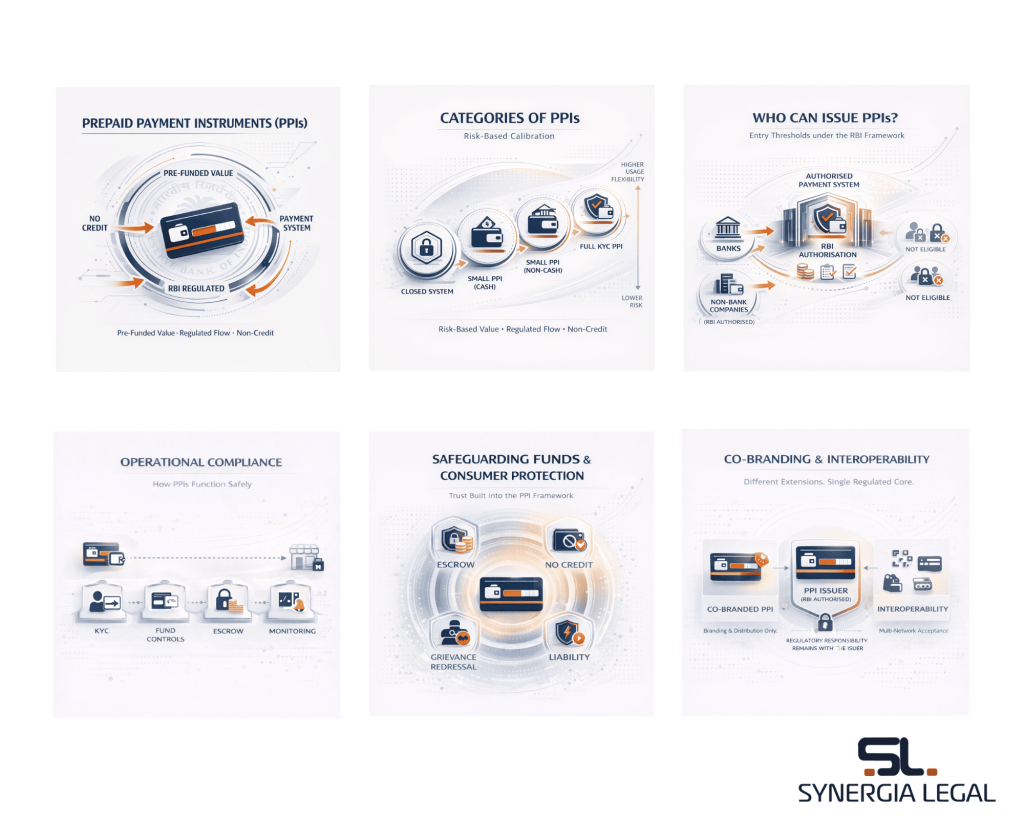
Explaining the regulatory overview of prepaid payment instruments in India

A Regulatory Overview of Prepaid Payment Instruments in India

A Prepaid Payment Instrument(“PPI”) is a regulated payment instrument that facilitates the purchase of goods and services against a pre-funded value stored on such instrument or accessible through it. Under the regulatory framework issued by the Reserve Bank of India (“RBI”), a PPI represents value paid for by the holder in advance and enables payment

A Regulatory Overview of Prepaid Payment Instruments in India Read More »

The image explains the RBI Co-lending Arrangements Directions, 2025

RBI’s Co-Lending Arrangements Directions, 2025: A Consolidated Framework for Collaborative Lending

Co-lending has emerged as a significant credit delivery model in India, where two regulated entities jointly fund loans and share credit risk and rewards on a pre-agreed basis. The Reserve Bank of India (Co-Lending Arrangements) Directions, 2025 (“Co-Lending Directions, 2025”/ “Directions”) provide a comprehensive statutory framework governing such arrangements between regulated entities (“REs”), including commercial

RBI’s Co-Lending Arrangements Directions, 2025: A Consolidated Framework for Collaborative Lending Read More »

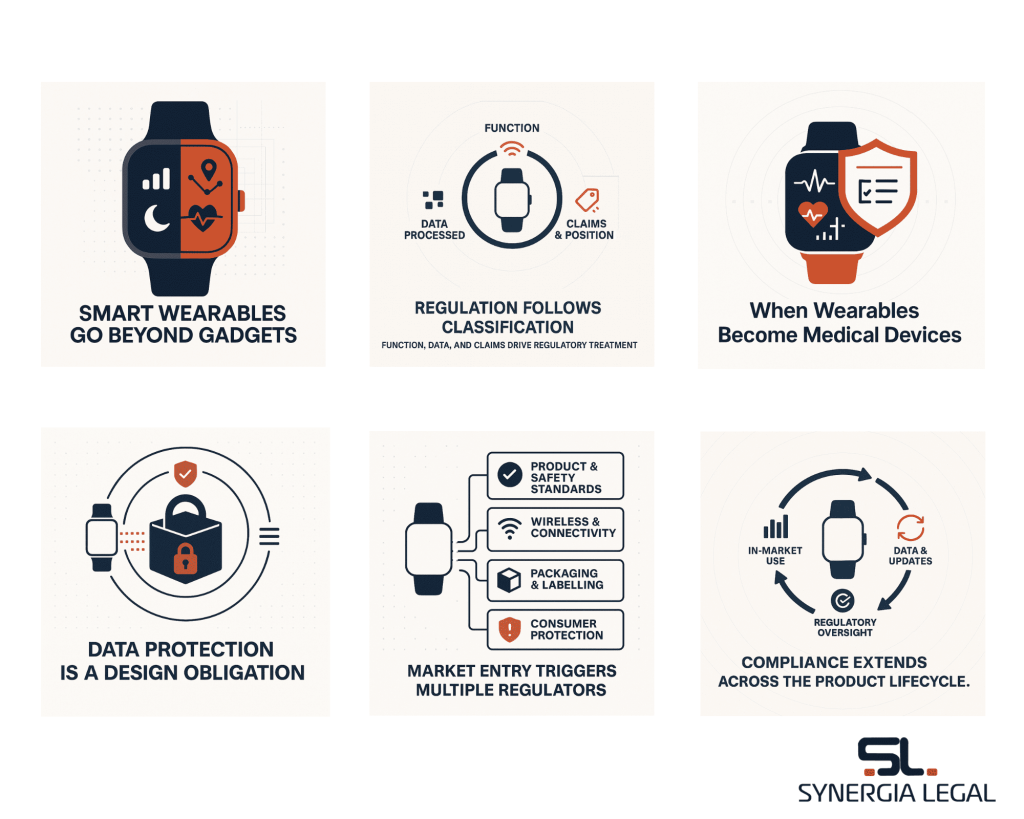
Overview of regulatory framework and laws applicable to smart wearables in India

Smart Wearables in India: An Overview of the Regulatory Framework

Smart wearables, ranging from fitness bands and smartwatches to rings and hearables, have rapidly become part of everyday life in India. What began as step counters and sleep trackers now includes devices capable of monitoring heart rate, oxygen levels, stress patterns, and even location, often in real time. These devices are no longer passive accessories;

Smart Wearables in India: An Overview of the Regulatory Framework Read More »

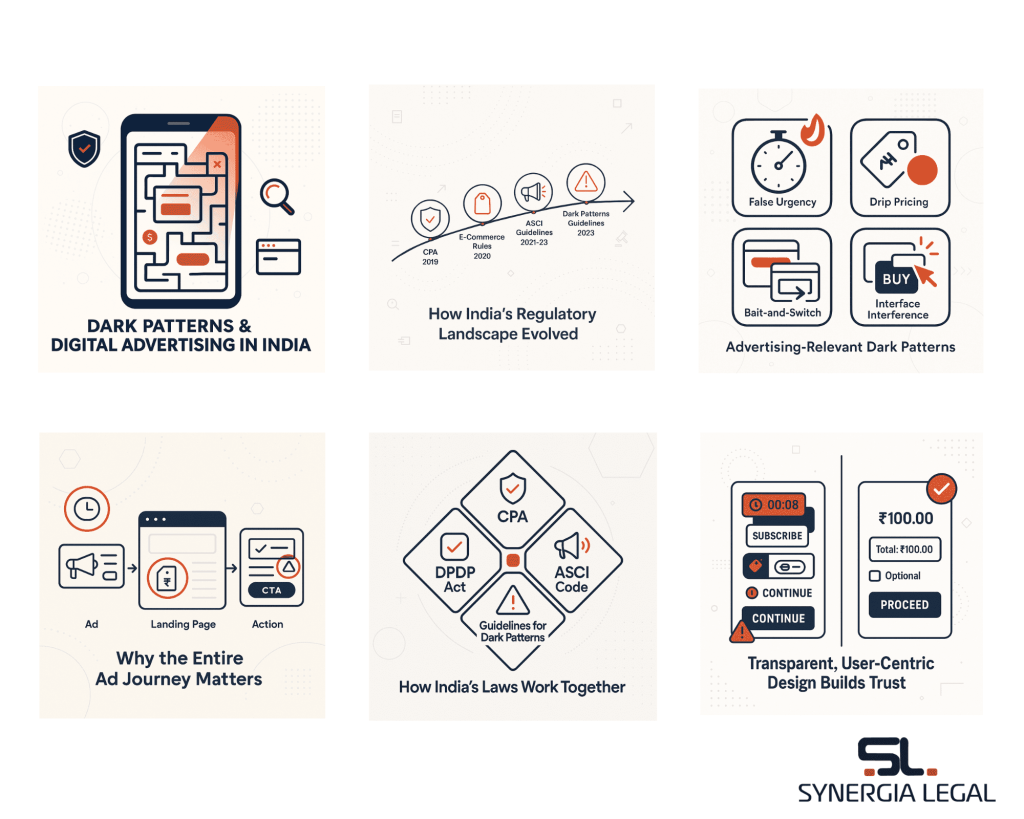
The image explains dark patterns in India, the evolution of law regulating dark patterns and the practices of dark patterns

Dark Patterns & Digital Ads: India’s Consumer Protection Framework

Dark patterns, interface designs that subtly manipulate or mislead users, have moved from being a niche UX debate to a central regulatory concern in India’s digital economy. As consumer-facing startups scale rapidly across e-commerce, fintech, healthtech and D2C verticals, product and marketing teams increasingly rely on persuasive design and targeted advertising to drive conversions. However,

Dark Patterns & Digital Ads: India’s Consumer Protection Framework Read More »

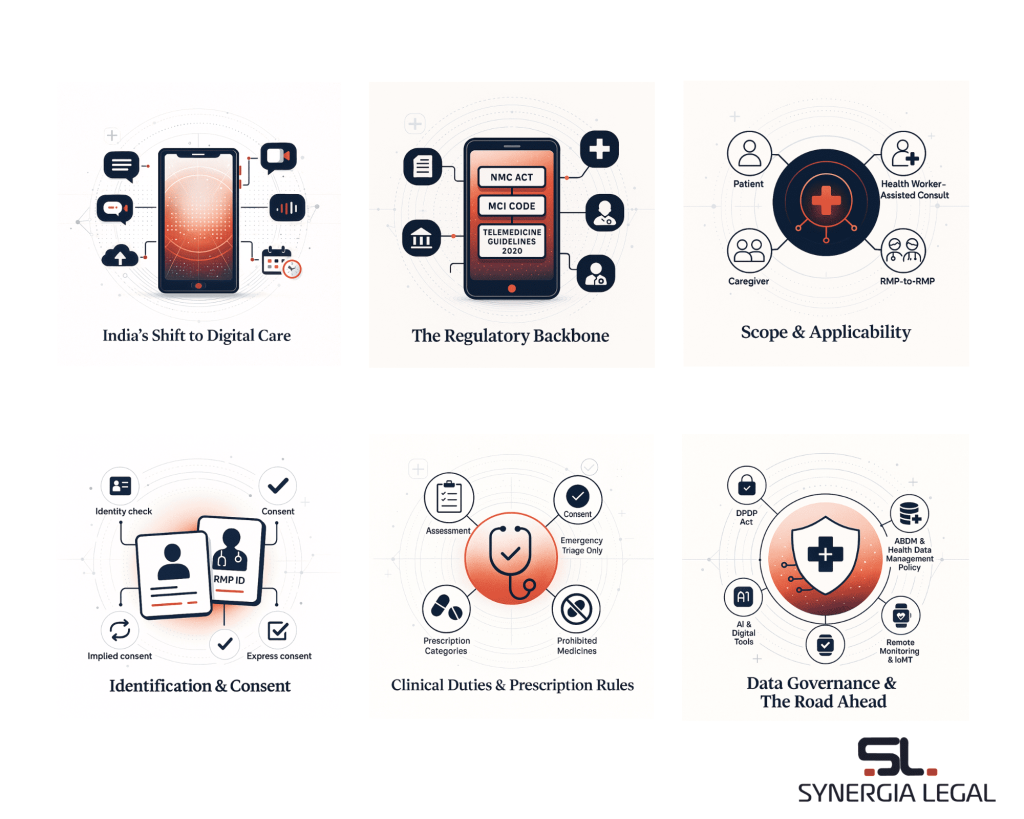
Telemedicine Guidelines 2020

Telemedicine in India: Understanding the Telemedicine Guidelines 2020

Telemedicine has rapidly moved from a peripheral healthcare option to a mainstream mode of medical practice in India, driven by rising digital adoption and the need for accessible, timely care. The COVID-19 pandemic accelerated this shift, prompting regulators to formally recognise remote consultations as a legitimate extension of clinical practice. Today, telemedicine enables patients to

Telemedicine in India: Understanding the Telemedicine Guidelines 2020 Read More »

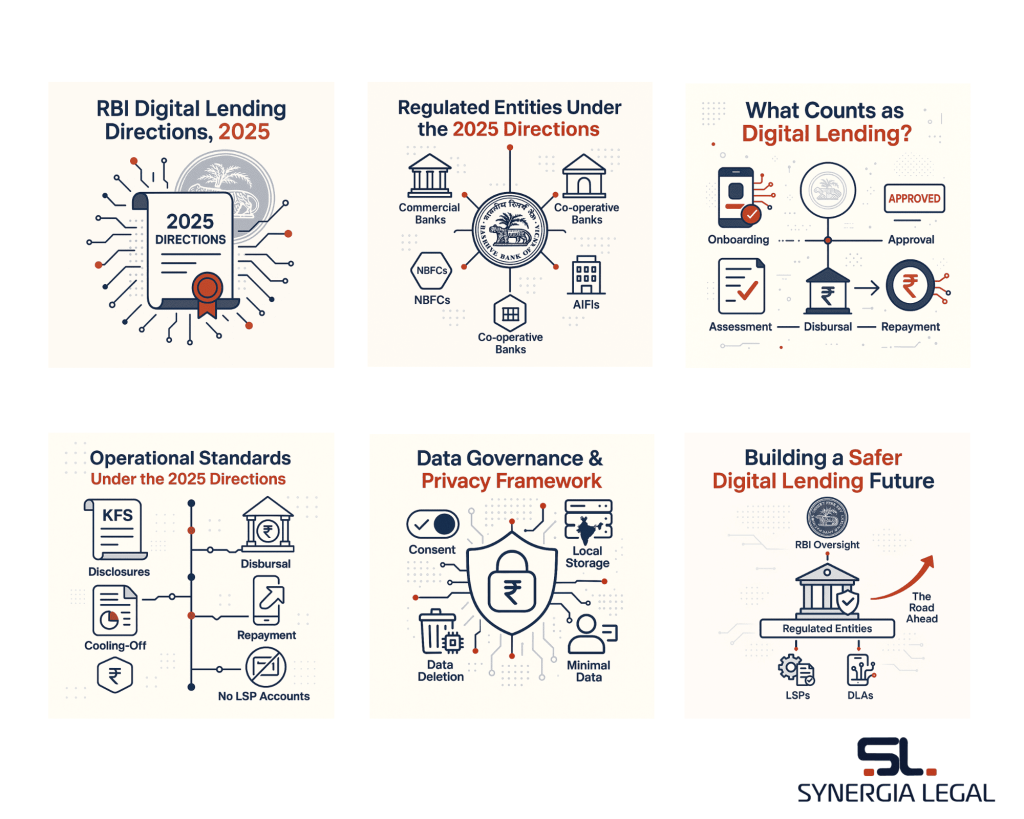
An overview of the RBI's Digital Lending Directions, 2025

An Overview of the RBI’s Digital Lending Directions, 2025

India’s digital lending ecosystem has expanded rapidly, driven by instant app-based credit, embedded finance models, and growing collaboration between fintech platforms and regulated lenders. This scale-up, while positive for financial inclusion, has also surfaced recurring concerns around opaque pricing, disproportionate data collection, and coercive recovery practices, issues that prompted the Reserve Bank of India (RBI)

An Overview of the RBI’s Digital Lending Directions, 2025 Read More »

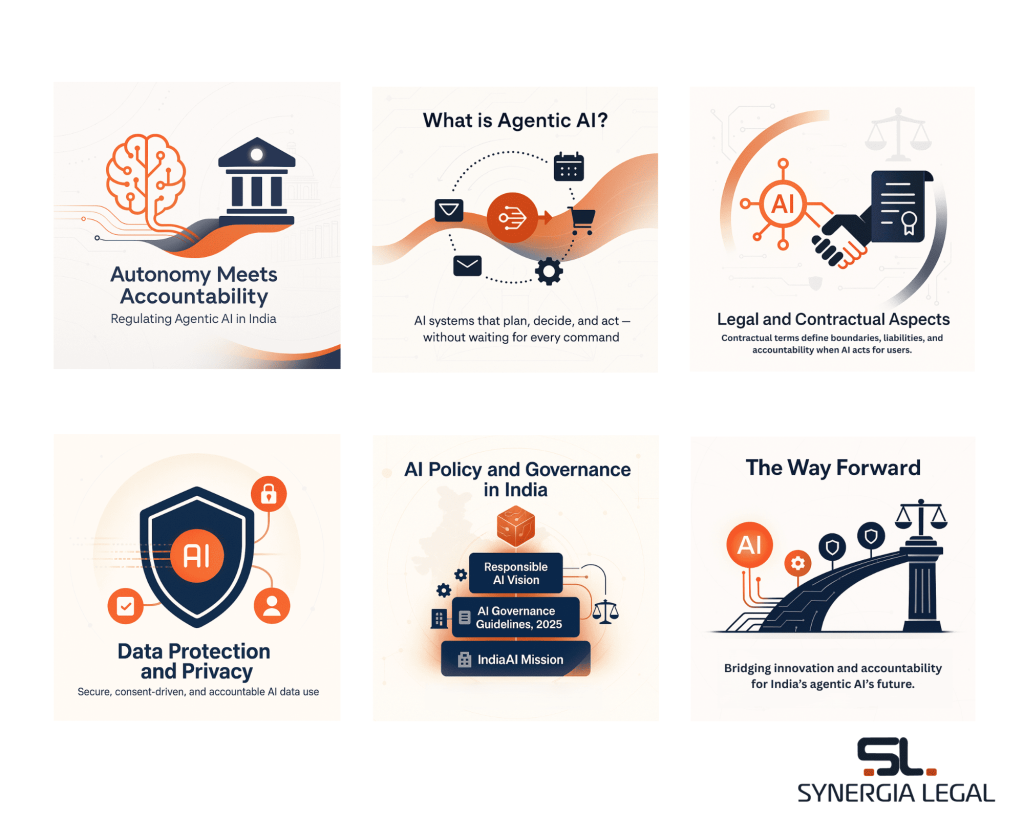
The image explains agentic AI and laws applicable to agentic AI in India.

Autonomy Meets Accountability: Regulating Agentic AI in India

Artificial intelligence has moved beyond passive assistance into a new phase of autonomy, often referred to as Agentic AI. These systems can independently make decisions, execute tasks, and interact with other digital environments without constant human input. From managing workflows and analysing contracts to responding to customer queries or drafting code, agentic AI tools are

Autonomy Meets Accountability: Regulating Agentic AI in India Read More »

The image explains the evolution of spacetech laws in India including the Indian Space Policy, 2023 and the future ahead.

India’s Space Policy 2023: From Monopoly to Market

For decades, India’s space story revolved around ISRO, a state-led model focused on research, exploration, and national missions. While this framework delivered scientific success, it left limited room for private enterprise. As global space commerce accelerated and Indian startups emerged with satellite and launch capabilities, the need for a clear regulatory pathway became evident. The

India’s Space Policy 2023: From Monopoly to Market Read More »

Depiction of legal compliances and incentives for EV manufacturing in India

EV Manufacturing in India: An Overview of Legal Framework and Policy Incentives

India’s transition toward clean mobility has accelerated in recent years, driven by an interplay of industrial policy, fiscal incentives, and environmental regulation. The central government’s focus on electric vehicles (EVs) aligns with its long-term goals under Make in India, Atmanirbhar Bharat, and the national commitment to achieve net-zero emissions by 2070. While public discussion often

EV Manufacturing in India: An Overview of Legal Framework and Policy Incentives Read More »

Disclaimer

The Bar Council of India does not permit any form of advertisement by advocates in India. By accessing the website: www.synergialegal.com, you understand and agree that the content published on the website is purely informational, and shall not be construed as an advertisement or promotional in nature.

You further agree that nothing published on the website: www.synergialegal.com shall be construed as a legal opinion or an advice provided by Synergia Legal or any of its members. Furthermore, nothing contained on this website creates any attorney client relationship between the user and Synergia Legal.