Legal Visualizer

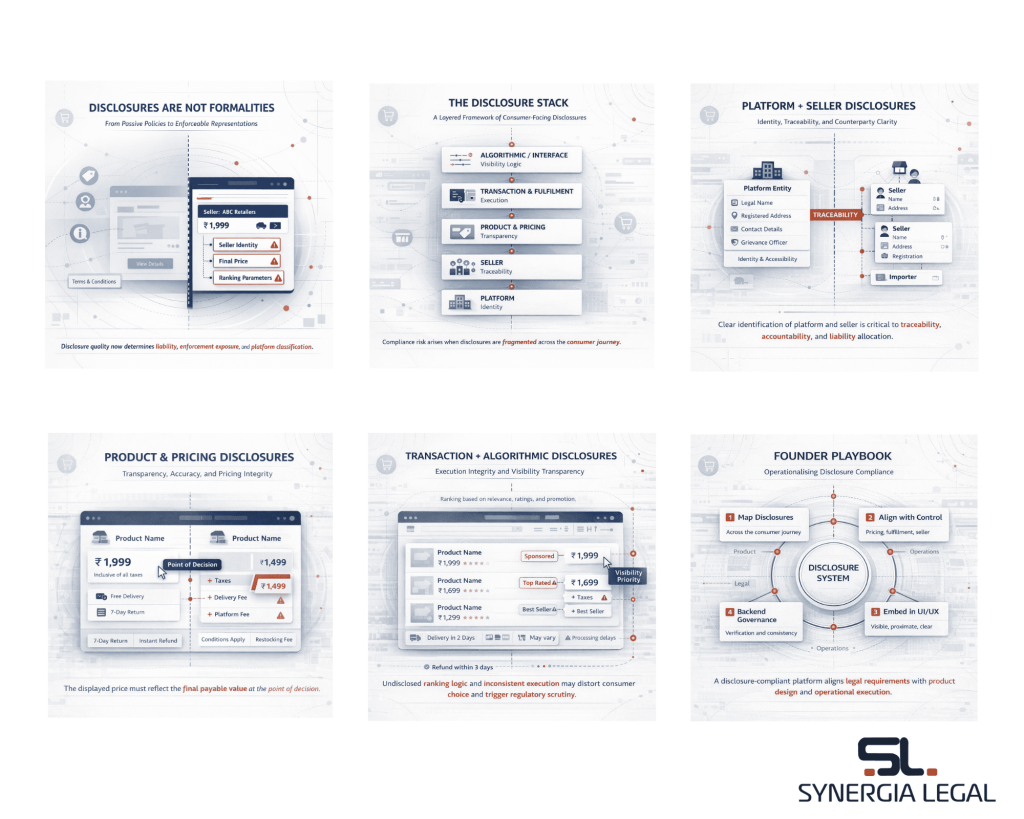
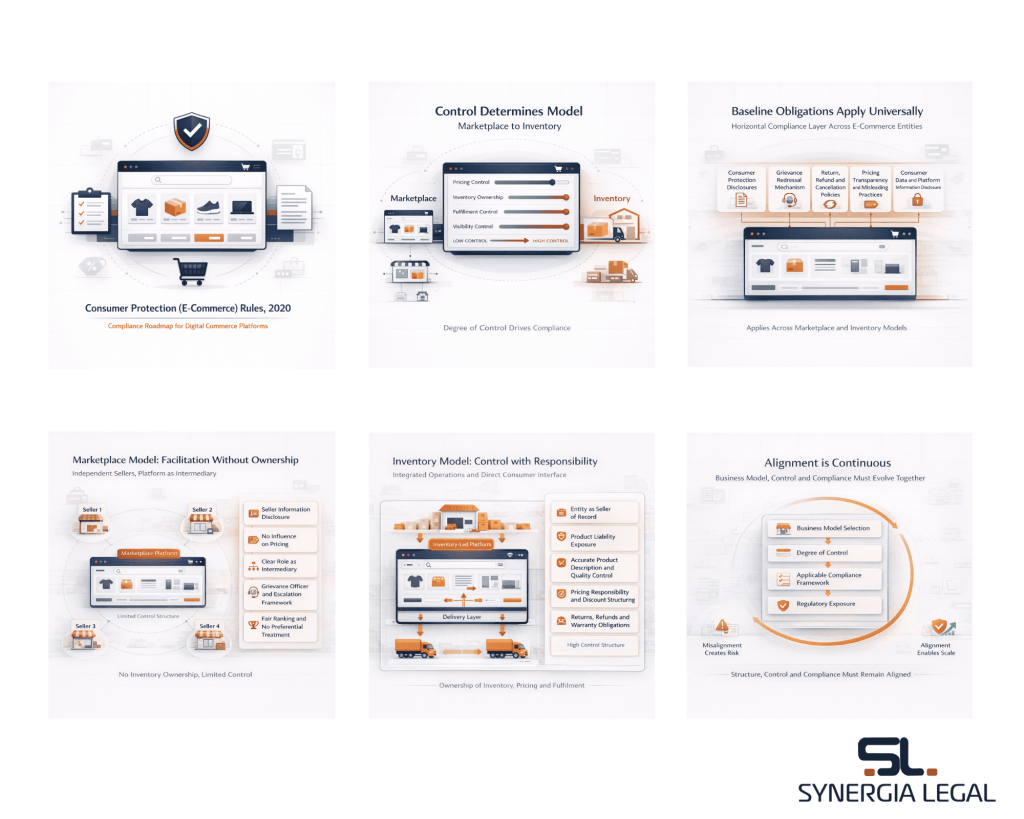
Compliances applicable to e-commerce platforms in India under the E-commerce Rules, 2020

Consumer Protection (E-Commerce) Rules, 2020: A Practical Compliance Roadmap for Digital Commerce Platforms in India

India’s e-commerce ecosystem has witnessed significant expansion over the past decade, accompanied by a parallel increase in regulatory oversight aimed at strengthening consumer protection. The Consumer Protection (E-Commerce) Rules, 2020 (“E-Commerce Rules”), framed under the Consumer Protection Act, 2019, establish a comprehensive compliance framework governing digital commerce, with applicability extending across all e-commerce models, including […]

Consumer Protection (E-Commerce) Rules, 2020: A Practical Compliance Roadmap for Digital Commerce Platforms in India Read More »

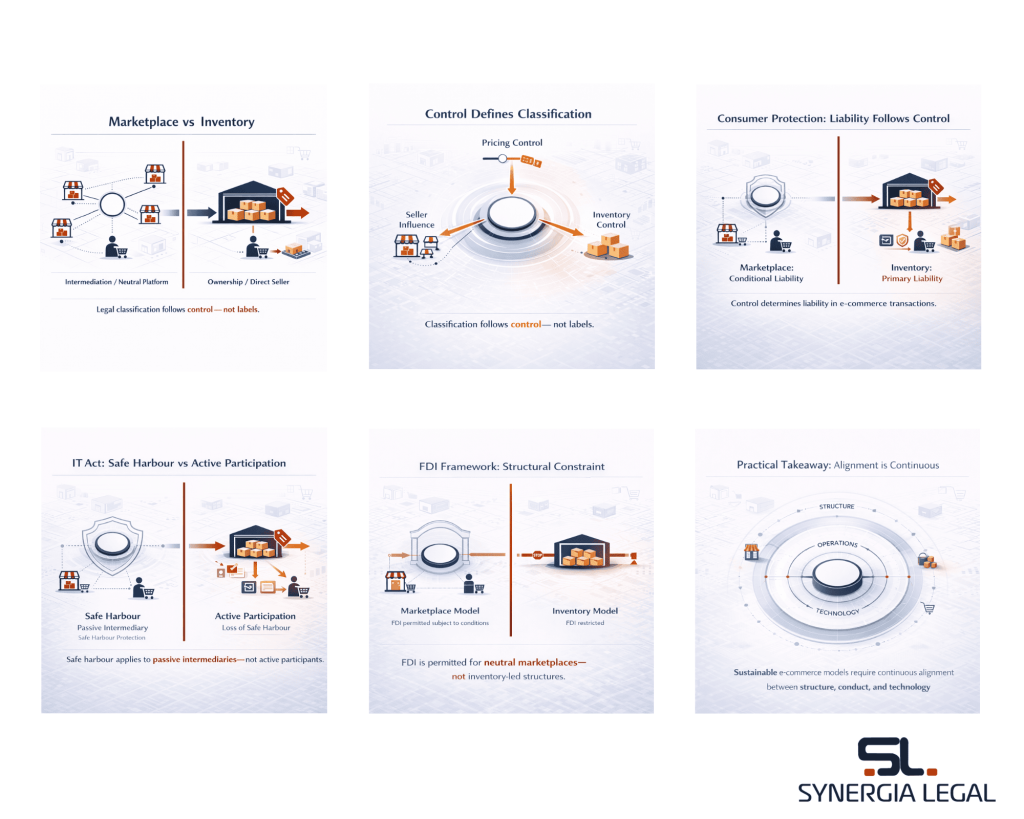
Differences between the marketplace and inventory model of ecommerce along with applicable compliances and laws.

Marketplace vs Inventory in Indian E-Commerce: Why Classification Continues to Drive Compliance

India’s e-commerce sector has evolved from early-stage digital marketplaces operating as neutral intermediaries to sophisticated, vertically integrated ecosystems combining logistics, data analytics, private labels and algorithm-driven pricing. This evolution has enabled scale and efficiency, but has simultaneously blurred the traditional boundaries between platform intermediation and direct retail. In this landscape, the distinction between a “marketplace

Marketplace vs Inventory in Indian E-Commerce: Why Classification Continues to Drive Compliance Read More »

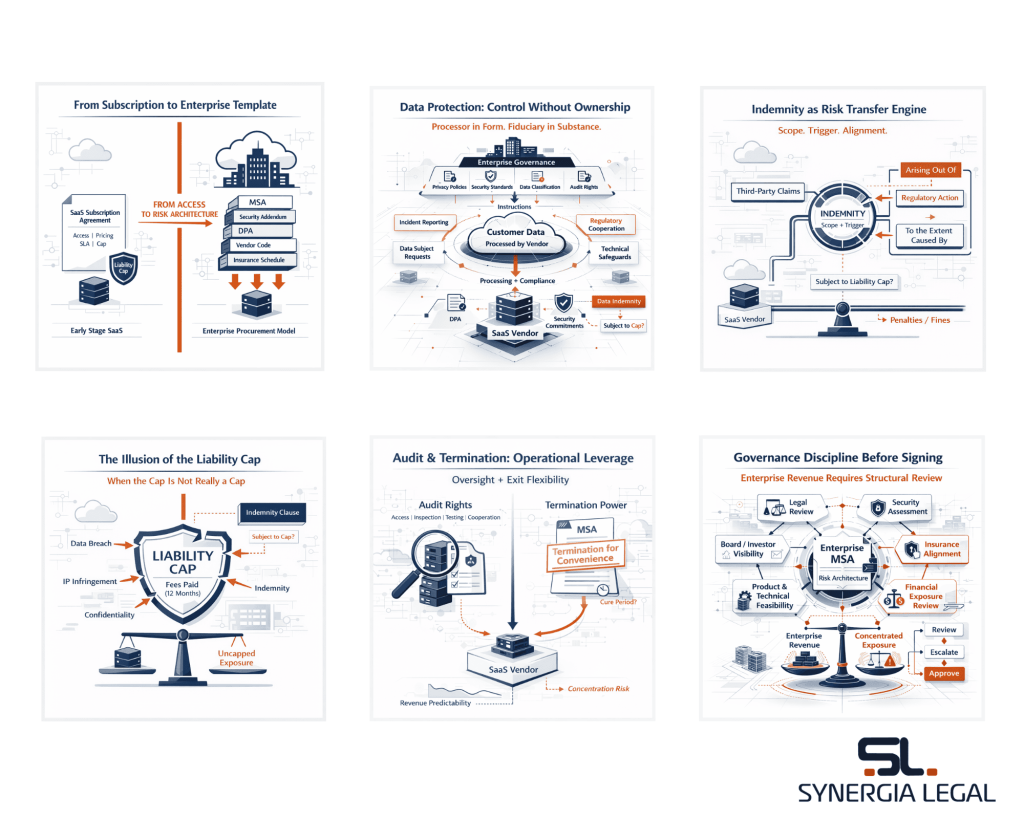
The image explains key considerations while negotiating saas subscription agreements for enterprises

Negotiating Enterprise SaaS Contracts: Risk Allocation, Procurement Leverage and Governance Discipline

In the early stages of growth, most software-as-a-Service (“SaaS”) ventures contract on their own subscription term, concise agreements built around standard access rights, pricing tiers, basic service levels and a capped liability construct aligned with annual fees. The commercial discussion typically centres on scope, implementation timelines and payment cycles. Legal risk, while present, remains proportionate

Negotiating Enterprise SaaS Contracts: Risk Allocation, Procurement Leverage and Governance Discipline Read More »

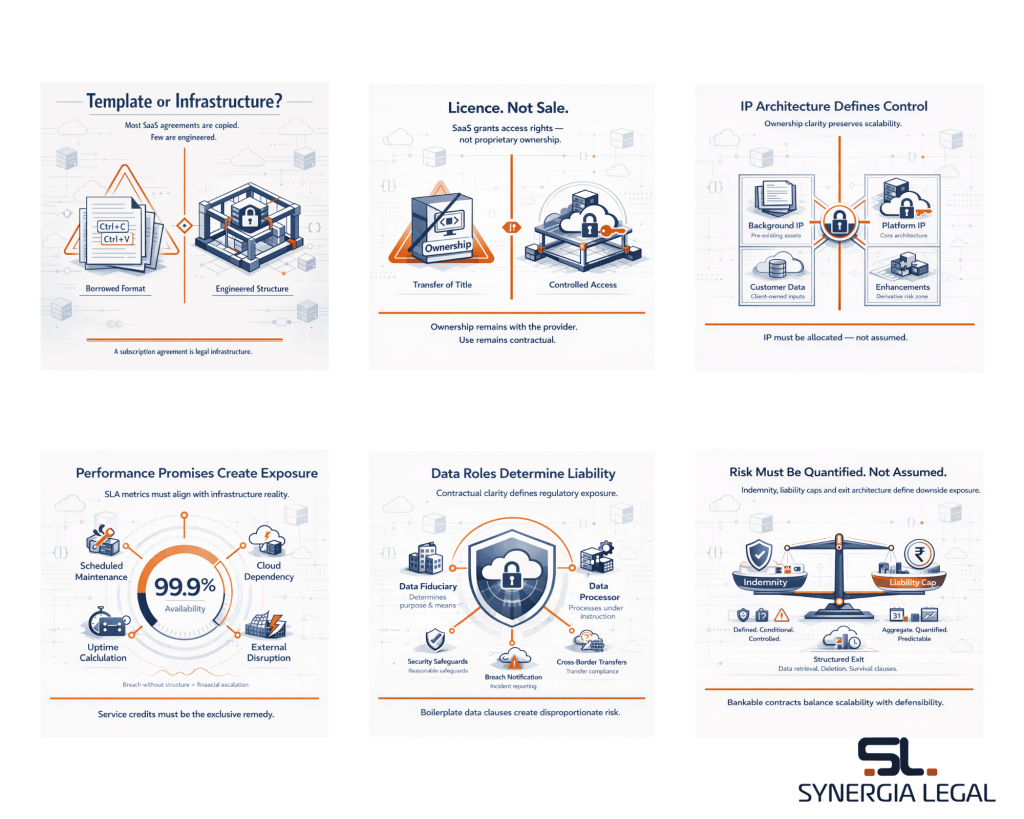
SaaS Agreement and its key considerations in the Indian context

SaaS Subscription Agreements: Structural Risks Indian Startups Cannot Overlook

In the Indian startup ecosystem, Software-as-a-Service (“SaaS”) subscription agreements are frequently treated as “industry standard” documents, downloaded, lightly modified, and deployed with minimal structural scrutiny. Founders often rely on templates sourced from US or European precedents, competitor websites, or investor-provided formats. While commercially convenient, this approach creates a fundamental misalignment: the agreement appears familiar, yet

SaaS Subscription Agreements: Structural Risks Indian Startups Cannot Overlook Read More »

Legal treatment of SaaS in India

SaaS Under Indian Law: Service, Software or Licence?

Software-as-a-Service (“SaaS”) has achieved near-universal commercial acceptance as a dominant software delivery model. In market practice, SaaS offerings are routinely described, and often contractually labelled, as the provision of “services”. This shorthand, while convenient, creates an illusion of legal certainty that Indian law does not fully support. Unlike several mature digital jurisdictions, Indian law does

SaaS Under Indian Law: Service, Software or Licence? Read More »

The image highlights the regulatory compliances applicable to payment aggregators, while also highlighting differences with payment gateways.

Payment Aggregators and Payment Gateways in India: Understanding the Regulatory Divide

India’s digital payments ecosystem has evolved from a facilitator-led model to a systemically important financial infrastructure. As transaction volumes scale and intermediaries increasingly sit between payers and merchants, the regulatory lens has decisively shifted from technology enablement to funds custody and settlement risk. This shift is most visible in the regulatory treatment of “Payment Aggregators”

Payment Aggregators and Payment Gateways in India: Understanding the Regulatory Divide Read More »

Explaining the regulatory overview of prepaid payment instruments in India

A Regulatory Overview of Prepaid Payment Instruments in India

A Prepaid Payment Instrument(“PPI”) is a regulated payment instrument that facilitates the purchase of goods and services against a pre-funded value stored on such instrument or accessible through it. Under the regulatory framework issued by the Reserve Bank of India (“RBI”), a PPI represents value paid for by the holder in advance and enables payment

A Regulatory Overview of Prepaid Payment Instruments in India Read More »

The image explains the RBI Co-lending Arrangements Directions, 2025

RBI’s Co-Lending Arrangements Directions, 2025: A Consolidated Framework for Collaborative Lending

Co-lending has emerged as a significant credit delivery model in India, where two regulated entities jointly fund loans and share credit risk and rewards on a pre-agreed basis. The Reserve Bank of India (Co-Lending Arrangements) Directions, 2025 (“Co-Lending Directions, 2025”/ “Directions”) provide a comprehensive statutory framework governing such arrangements between regulated entities (“REs”), including commercial

RBI’s Co-Lending Arrangements Directions, 2025: A Consolidated Framework for Collaborative Lending Read More »

Overview of regulatory framework and laws applicable to smart wearables in India

Smart Wearables in India: An Overview of the Regulatory Framework

Smart wearables, ranging from fitness bands and smartwatches to rings and hearables, have rapidly become part of everyday life in India. What began as step counters and sleep trackers now includes devices capable of monitoring heart rate, oxygen levels, stress patterns, and even location, often in real time. These devices are no longer passive accessories;

Smart Wearables in India: An Overview of the Regulatory Framework Read More »

The image explains dark patterns in India, the evolution of law regulating dark patterns and the practices of dark patterns

Dark Patterns & Digital Ads: India’s Consumer Protection Framework

Dark patterns, interface designs that subtly manipulate or mislead users, have moved from being a niche UX debate to a central regulatory concern in India’s digital economy. As consumer-facing startups scale rapidly across e-commerce, fintech, healthtech and D2C verticals, product and marketing teams increasingly rely on persuasive design and targeted advertising to drive conversions. However,

Dark Patterns & Digital Ads: India’s Consumer Protection Framework Read More »

Disclaimer

The Bar Council of India does not permit any form of advertisement by advocates in India. By accessing the website: www.synergialegal.com, you understand and agree that the content published on the website is purely informational, and shall not be construed as an advertisement or promotional in nature.

You further agree that nothing published on the website: www.synergialegal.com shall be construed as a legal opinion or an advice provided by Synergia Legal or any of its members. Furthermore, nothing contained on this website creates any attorney client relationship between the user and Synergia Legal.