corporate law firm in hyderabad

Legal disclosure requirements for E-commerce in India

Mandatory Disclosures on E-Commerce Platforms: A Practical Compliance Playbook for Indian Businesses

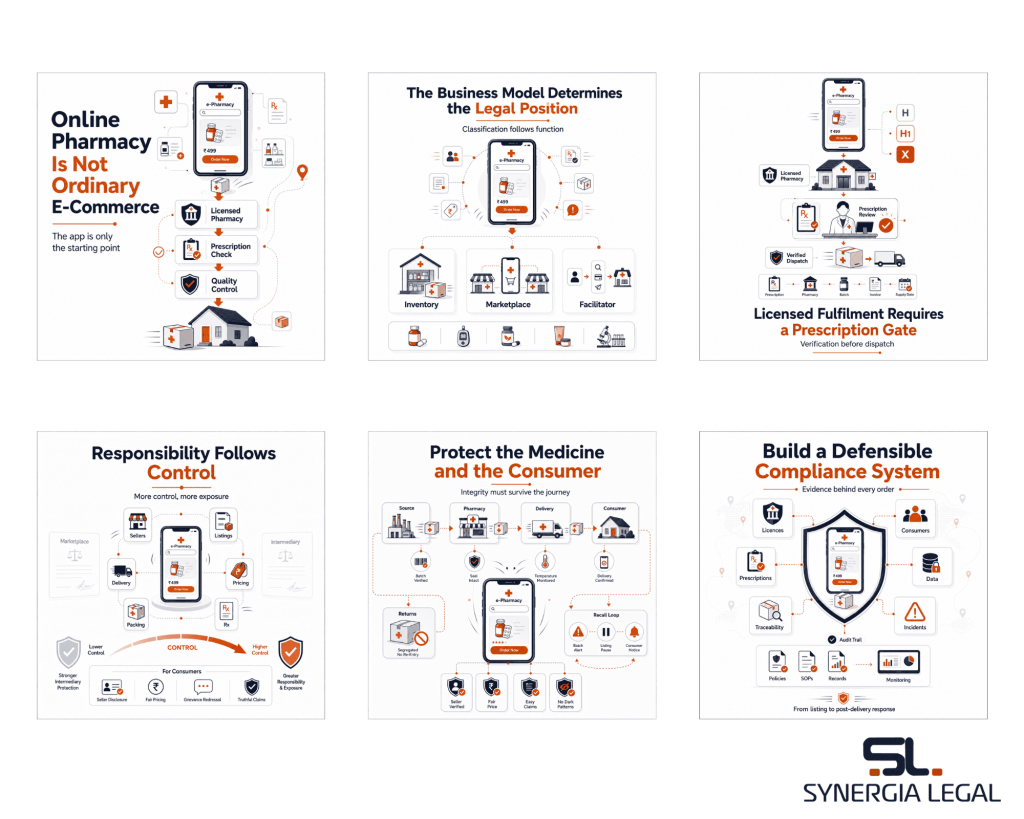
In the evolving regulatory landscape governing digital commerce in India, disclosure obligations have moved decisively beyond a matter of formal compliance to become a central determinant of enforcement exposure. Historically, e-commerce platforms approached disclosures as policy-driven requirements, often embedded within standard terms of use or relegated to secondary pages. This approach is no longer tenable. […]

Mandatory Disclosures on E-Commerce Platforms: A Practical Compliance Playbook for Indian Businesses Read More »

The image talks about legality of AoA and SHA in India

Articles of Association and Shareholders’ Agreements: The Limits of Private Ordering in Indian Company Law (Corporate Governance in Private Companies, Part V)

In a typical investment round in a private company, the most intensely negotiated aspects of the transaction seldom relate to the statutory filings or the form of the company’s constitutional documents. Instead, they centre around control, economics, and exit i.e., board composition, affirmative voting rights, transfer restrictions, and liquidation preferences. These rights are almost invariably

Articles of Association and Shareholders’ Agreements: The Limits of Private Ordering in Indian Company Law (Corporate Governance in Private Companies, Part V) Read More »

The image depicts the conflict between majority shareholder and minority shareholder in private companies

Beyond Majority Rule: Control, Veto Power and Fairness in Indian Private Companies (Corporate Governance in Private Companies, Part III)

Company law is traditionally anchored in the principle of shareholder democracy. Those who hold the majority of voting rights determine the company’s course; resolutions are passed by numerical strength; and management ultimately derives legitimacy from shareholder approval. The Companies Act, 2013 reflects this architecture. Section 47 of the Companies Act, 2013 confers voting rights upon

Beyond Majority Rule: Control, Veto Power and Fairness in Indian Private Companies (Corporate Governance in Private Companies, Part III) Read More »

Fiduciary responsibilities of directors under the Indian companies laws.

Directors and the Board: Corporate Stewardship under Indian Company Law (Corporate Governance in Private Companies, Part II)

Indian company law understands the Board of Directors not merely as a managerial organ, but as an institution of corporate stewardship. At its core, stewardship reflects the idea that directors exercise power in trust, for the company as a distinct legal person, and not as proprietors of corporate authority. This distinction is critical, particularly in

Directors and the Board: Corporate Stewardship under Indian Company Law (Corporate Governance in Private Companies, Part II) Read More »

Disclaimer

The Bar Council of India does not permit any form of advertisement by advocates in India. By accessing the website: www.synergialegal.com, you understand and agree that the content published on the website is purely informational, and shall not be construed as an advertisement or promotional in nature.

You further agree that nothing published on the website: www.synergialegal.com shall be construed as a legal opinion or an advice provided by Synergia Legal or any of its members. Furthermore, nothing contained on this website creates any attorney client relationship between the user and Synergia Legal.